Français
 English
 Deutsch
 español
 Italiano
 日本語
 Eλληνικά
 русский
 português


The Wizz Wheel is a tractor-mounted wheel trencher, built by AFT Trenchers in Sudbury, Suffolk, and in use on pitches since 1985.
It fits on the three-point linkage, runs off the PTO, and uses a hardened-steel digging wheel to cut narrow, clean trenches between 50 and 150 mm wide.
Sports turf contractors use it for pipe drains and sand slits. Civil contractors use it to lay cable, fibre and water pipe.
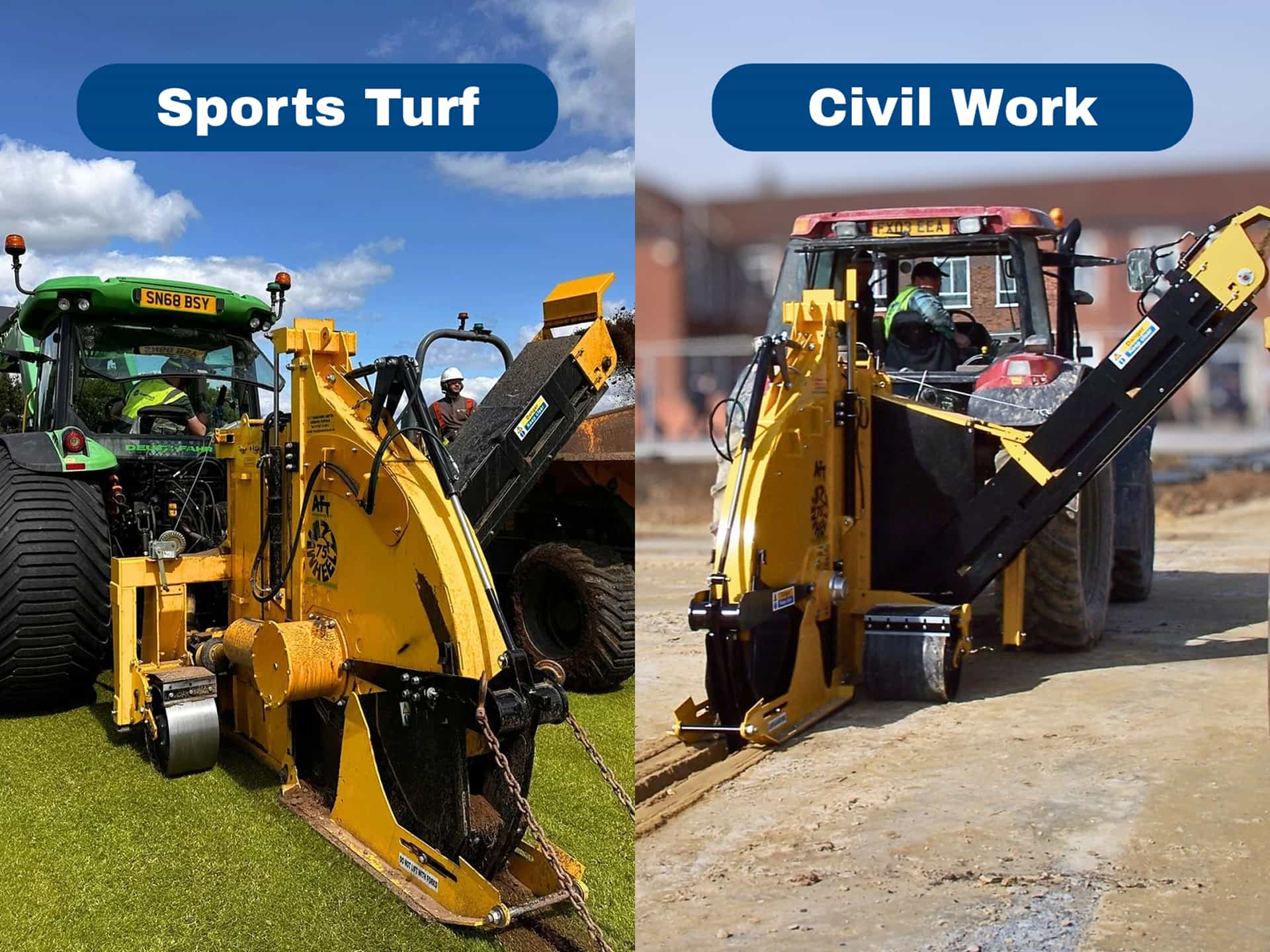
This guide is written for both groups of operators. It explains:
- What the Wizz Wheel trencher does,
- Where it beats other ways of digging,
- Which of the two models suits your work.
- The jobs where a wheel trencher is NOT the right tool.
If you only work on one side of the industry, skip straight to the sports turf or civil section. The model guide and the section on owning one apply to everyone.
What is a Wizz Wheel trencher?
Think of it as a heavy-duty cutting wheel on the back of your tractor. Teeth around the rim bite into the ground as the wheel turns, and the tractor creeps forward slowly while it cuts. The result is a narrow trench with straight, clean sides.
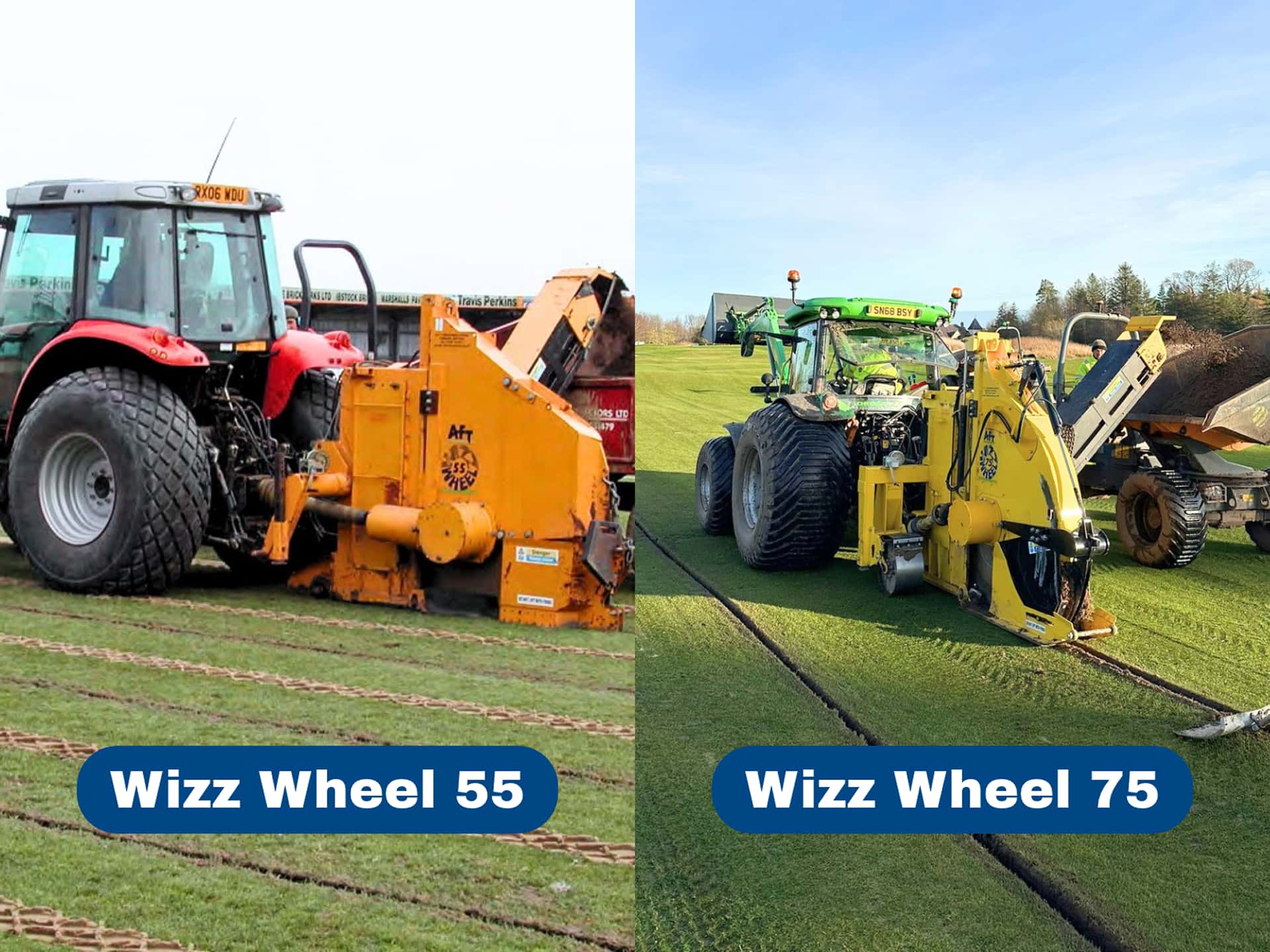
There are two models, split by depth:
- Wizz Wheel 55: digs to 0.55 m, weighs about 1,100 kg and fits a CATII linkage.
- Wizz Wheel 75: digs to 0.75 m, weighs about 2,000 kg and fits a CATIII linkage.
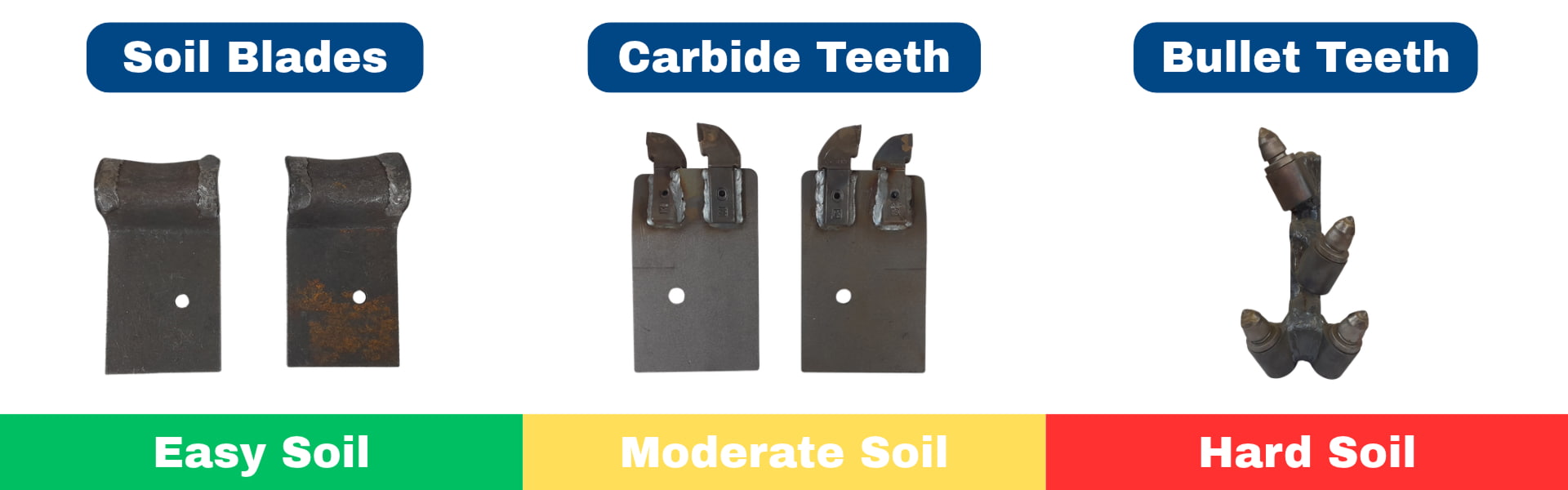
Both cut from 50 to 150 mm wide. Digging teeth are available for all ground conditions:
- Soil blades for soft clay, sand and silt
- Carbide teeth for heavy clay and small stones
- Bullet teeth for large stones, rocky ground and asphalt
The Wizz Wheel on sports turf
What it does
On a sports pitch, one Wizz Wheel can do both layers of a drainage scheme:
- It digs the primary drainage channels for the pipe.
- Then cuts the narrow sand slit laterals that run across them and carry surface water down into the drains.
Our pitch drainage guide explains how the two layers work together.
A conveyor lifts the spoil up to 2.2 m and drops it straight into a dumper, so no soil is left lying on the turf.
Pipe laying and backfilling options:
- A pipe chute and reel carrier let you dig the trench and lay the pipe together.
- Automatic laser grading holds a steady fall on your drainage channels, and AFT usually has complete laser systems in stock.
- For backfilling, the Wizz Wheel works alongside AFT’s Dual Use Hopper, which places gravel or sand with three levels of compaction, and the Sandbander for firm, consolidated sand slits.
Where it wins
1. Hours, not days, to get your trenching done.
On sports turf, the Wizz Wheel cuts at 150 to 750 metres an hour, depending on the ground, depth and width.
Hewitt Sportsturf tell us they operate at 500 metres an hour on secondary drainage.
In club terms, a 100 x 60 metre pitch with slits at 1 metre centres needs about 6,000 metres of slits. At 500 metres an hour, that is roughly 12 hours of trenching.
2. A clean finish.
The narrow cut leaves minimal surface damage, so the pitch can be back in use quickly.
Karl Molyneux of KPM Groundworks says it “leaves a nice clean finish which saves loads of time on the job.”
3.Wet, heavy clay. No problem.
The UK drainage window often falls in a wet autumn.
The Wizz Wheel’s housing is designed to resist clay clogging, a point customers who have used other trenchers highlight.
4. Stony ground. No problem either.
Many pitches sit on stony or made-up ground. With bullet teeth fitted, the Wizz Wheel gets through it. John van Roestel of TDS Turf Drainage Systems in Canada calls it “a rugged machine in tough and stony conditions.”
Here is the Wizz Wheel 75 cutting into basalt for sports turf contractor AMS Contracting:
5.Contractors keep buying it.
Talbot Group, J Mallinson, BPG Contractors, J Pugh-Lewis, J & R Alker, Chappelow Sports, Cleveland Land Services, W E Hewit, KPM Groundworks, Sportsfields, Burroughs – to name a few in the UK – keep using Wizz Wheel trenchers, often alongside an AFT100 chain trencher.
Wizz Wheels are used across the world like Mexted Sports Turf in New Zealand.
The Wizz Wheel on civil sites
What it does
For civil work, the Wizz Wheel trencher cuts narrow trenches for fibre optic and electric cables, water pipes, irrigation and drainage pipes.
Wizz Wheels can be fitted with bullet teeth for rocky soils, asphalt and concrete, or carbide teeth for heavy clay and light stones.
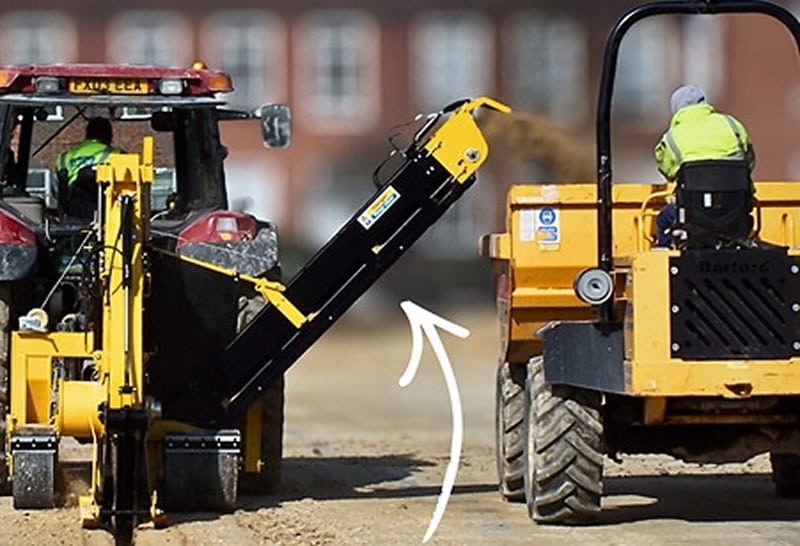
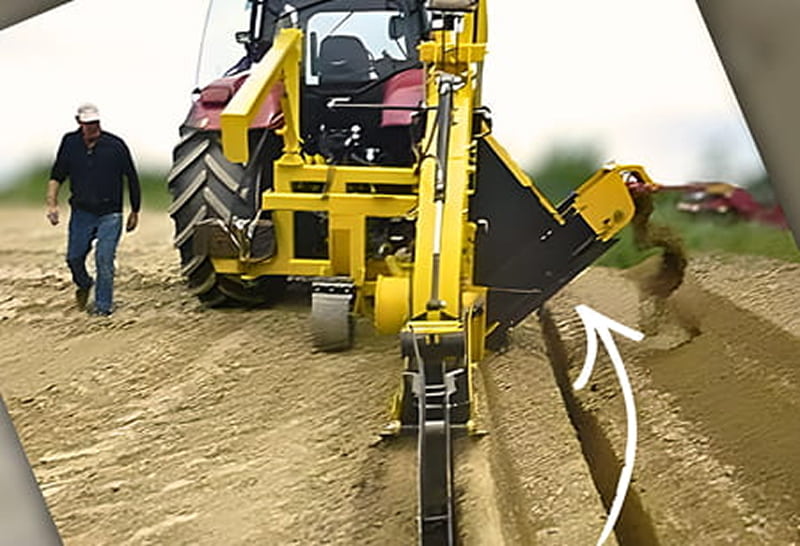
You choose how the spoil is handled to suit the site:
| A conveyor that lifts it 2.2 m into a dumper |
A short conveyor that places finely cut spoil about 1 m from the trench |
A shroud that drops it to the side |
|---|---|---|
 |
 |
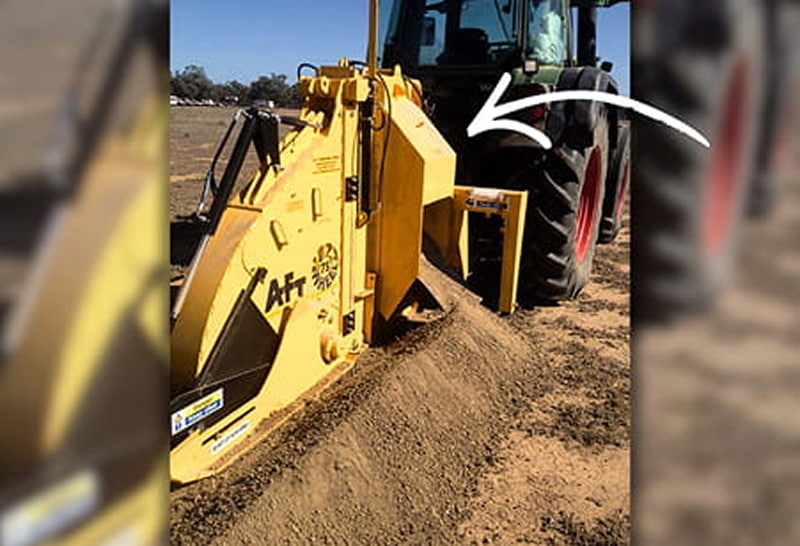 |
Each option digs and deals with the spoil in one pass, so you don’t need a second machine to clean up.
Laser grading is available for drainage pipes that need a steady fall.
Where it wins
1. Hard ground.
Asphalt, crushed concrete and rocky soils are where many machines struggle.
The Wizz Wheel cuts through ground as hard as basalt, which is grade 6 on the Mohs hardness scale.
2. No track marks on the road.
The tractor runs on tyres, so it does not chew up verges or tarmac on the way in.
French contractor Vincent Debiolles uses his to lay fibre: “Clients and city councils are very happy with the result: neat trench and no caterpillar track marks on the road since we use a tractor”.
The tractor can also carry the trencher between sites.
3. A smaller reinstatement bill.
A narrow trench means less over-dig, less spoil to move and less backfill to bring in. On many civil jobs, reinstatement is the highest cost on the job sheet.
More on this is in our article on fibre optic cabling.
4. Steady speed.
Expect 100 to 300 m an hour in moderate ground and up to 750 m an hour in easy ground.
5. Cost-effective investment.
Because the Wizz Wheel is an attachment rather than a self-propelled machine, it costs less to buy.
Between trenching jobs, the tractor can be used for other projects.
Wizz Wheel 55 or 75?
The right Wizz Wheel trencher depends on depth, ground conditions, and the tractor you already have.
| Wizz Wheel 55 | Wizz Wheel 75 | |
|---|---|---|
| Maximum depth | 0.55 m | 0.75 m |
| Width | 50 to 150 mm | 50 to 150 mm |
| Weight | About 1,100 kg | About 2,000 kg |
| Linkage | CATII | CATIII |
| Tractor | 75 hp plus | 120 hp plus (130 hp plus for civil work) |
| Best for | Shallow primary & Sand slitting on lighter tractors | Primary to 0.75 m, harder ground and civil work, & laterals |
Both need:
- a VARIO transmission or a creeper gearbox that can operate as low as 50 to 100 m an hour,
- Spool valves for the hydraulics (3 sets for the 55, 4 sets for the 75),
- A 540 RPM PTO.
If most of your work is slitting existing pitches, the Wizz Wheel 55 is lighter and runs on a smaller tractor. If you dig deeper trenches, work in hard ground, or take on civil jobs, look at the 75.
Where a wheel trencher isn’t the answer
A wheel trencher works best on narrow, fast cuts in hard ground. It isn’t the right tool for every job.
If you need deeper or wider trenches (deeper than 0.75 m or wider than 150 mm), you need a chain trencher such as the AFT45 or AFT100.
Built to Keep Cutting for Decades
The Wizz Wheel trencher has a long record. Hewitt Sportsturf still run a Wizz Wheel 55 that is 35 years old, and Cleveland Land Services have used theirs for 22 years.
AFT’s Wizz Wheels can run for over 20 years when they are looked after, and the wheel itself rarely needs replacing unless it’s constantly digging in very hard ground.
What about ease of use and maintenance?
- If you can drive a tractor, you can run a Wizz Wheel.
- Grease it monthly, check the gearbox oil, and inspect it visually for wear.
- When you need a part, find it in AFT’s 3D parts book, and most orders are shipped within 24 hours.
To sum up:
- On sports turf, one machine cuts both laterals and sand slits, keeps spoil off the playing surface and gets pitches back in use fast.
- On civil sites, it cuts clean, narrow trenches through hard ground without marking the road, and keeps reinstatement to a minimum.
- Choose the 55 for shallow primary drainage and sand slitting on a lighter tractor,
- Choose the 75 for deeper drainage, harder ground, and civil work, plus sand slitting.
If you would like to talk through your ground, your tractor and the work you take on, contact our team and we’ll help you choose the right setup.